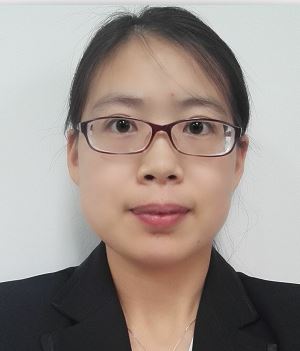
Dr. Lujun Zhai is a Research Assistant Professor in the Department of Electrical and Computer Engineering at Prairie View A&M University (PVAMU). Dr. Zhai received her Ph.D. and M.S. degrees in Electrical and Computer Engineering from Prairie View A&M University and her B.S. degree in Electrical Engineering from the University of Jinan, China.
Dr. Zhai’s research focuses on interdisciplinary work in Bioinformatics, AI-driven computer vision, High-Performance Computing (HPC), and AI-on-Chip systems to develop intelligent and efficient computing solutions that connect AI algorithms with advanced hardware platforms to solve real-world problems. She has published multiple research papers, including work recognized with the Best Paper Award at IEEE AIIoT 2024. In addition to her research, she develops HPC-based training modules and supports advanced computing for AI-driven tasks.
Past Research
My early research focused on AI-based real-world image restoration and object detection. During my Ph.D. and postdoctoral training at Prairie View A&M University, I developed models for underwater image enhancement, historical image restoration, and object detection using adversarial networks and transformer-based models. I also explored accelerator-based computing, studying the performance of AI models on GPUs and IPUs in high-performance computing environments through collaboration with the Texas A&M High Performance Research Computing (HPRC) center.
Current Research
My current research integrates AI algorithms with high-performance computing (HPC) and semiconductor-aware design. I investigate how image enhancement and generative models can improve downstream tasks such as object detection and scientific analysis, and study instance-level data augmentation strategies for small-object detection. I also work on AI-on-Chip research, focusing on hardware-aware AI algorithms and model acceleration on FPGA platforms, in collaboration with Texas A&M University.
Future Research
My future research will focus on three main directions: - Developing task-aware AI models for scientific imaging and bioinformatics applications. - Designing efficient AI architectures for specialized hardware and chip design workflows. - Expanding cyberinfrastructure-based education to support semiconductor and advanced computing workforce development.
My long-term goal is to bridge AI, hardware systems, and scalable computing to enable efficient and impactful intelligent technologies.