Abstract
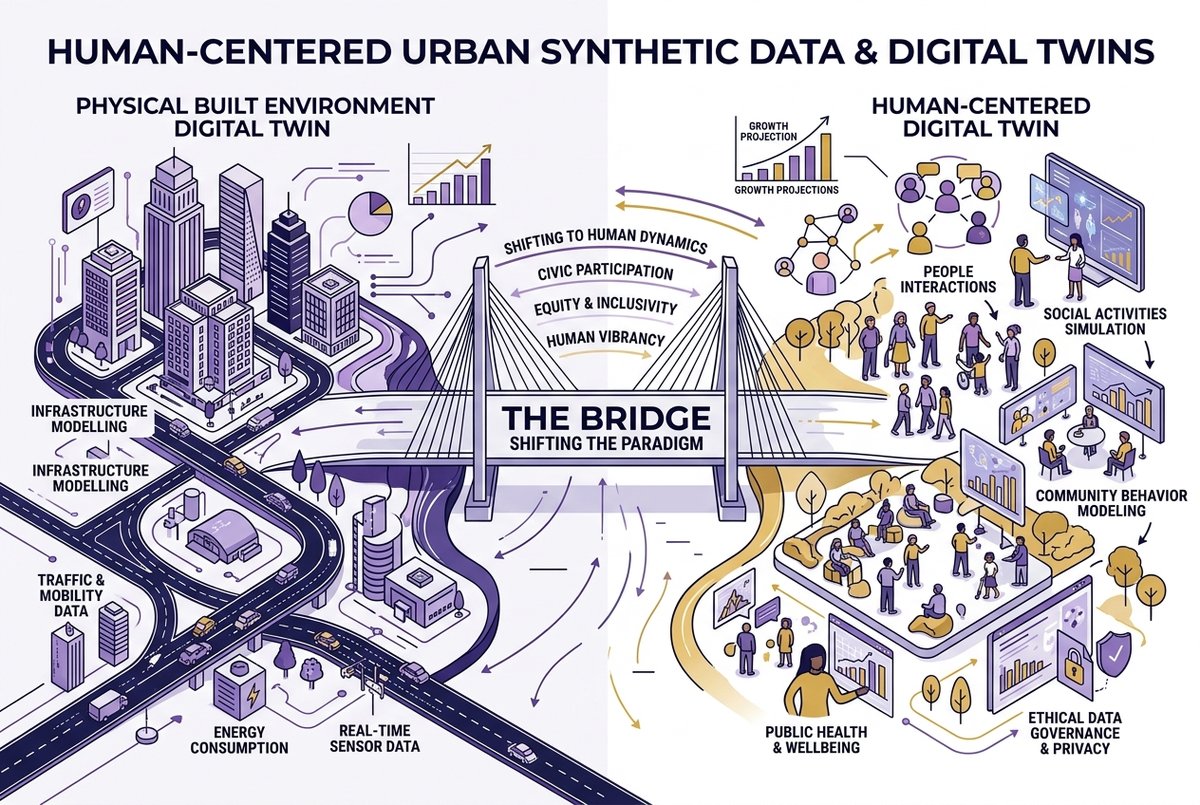
Urban synthetic data has emerged as a transformative tool for planning research, yet its full potential remains constrained by an overwhelming focus on physical spaces and object recognition. Current digital twin analysis prioritizes built environments over human interactions, while privacy concerns in social media-based behavioral studies limit reproducibility. This commentary argues for a paradigm shift—one that integrates human vibrancy into urban synthetic data approaches to foster human-centered digital twins. By addressing key challenges of privacy, reproducibility, and technical feasibility, human-centered synthetic data can redefine urban informatics, bridging the gap between digital representations and lived urban experiences.