Abstract
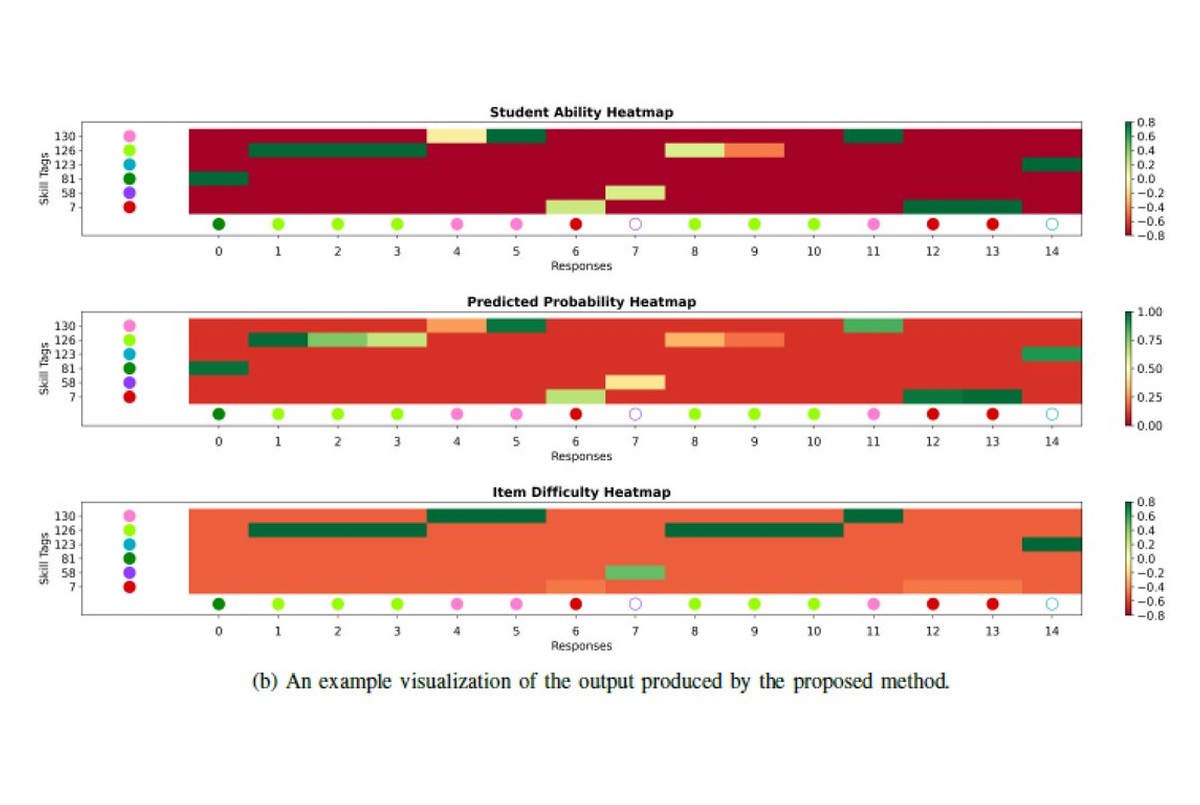
Student learning outcome (SLO) tracing aims to monitor students’ learning progress by predicting their likelihood of passing or failing courses using Deep Knowledge Tracing (DKT). However, conventional DKT models often lack interpretability, limiting their adoption in educational settings that require transparent decision-making. To address this challenge, this quantitative study proposes an interpretable ensemble framework that integrates Item Response Theory (IRT) with DKT. Specifically, multiple IRT-based DKT models are developed to capture student ability and item characteristics, and these models are combined using a bagging strategy to enhance predictive performance and robustness. The framework is evaluated on an SLO tracing dataset from Prairie View A&M University (PVAMU), a historically Black college and university (HBCU). Result analysis includes comparisons of evaluation metrics such as Area Under the Curve (AUC), accuracy (ACC), and precision across individual and ensemble models, as well as visualizations of student ability, item difficulty, and predicted probabilities to assess interpretability. Experimental results demonstrate that the ensemble approach consistently outperforms single models while providing clear, interpretable insights into student learning dynamics. These findings suggest that integrating ensemble methods with IRT can simultaneously improve prediction accuracy and transparency in SLO tracing.