Abstract
The proximal small intestine plays a central role in carbohydrate digestion, where complex dietary polysaccharides are enzymatically hydrolyzed into glucose and intermediate saccharides prior to absorption or further transformation. In this study, a comprehensive numerical model is developed to simulate glucose formation from digestible carbohydrates and its subsequent transformation into non-digestive oligosaccharides within the proximal small intestine. The model, which depicts the proximal small intestinal (PSI) digestion as a series of continuous stirred-tank reactors, integrates enzymatic kinetics, luminal transport, absorption, and convective flow to describe the temporal evolution of carbohydrate species along the intestinal segment. A system of coupled nonlinear ordinary differential equations is formulated to represent starch hydrolysis, brush-border enzyme activity, microbial and exogenous enzyme-mediated transglycosylation, and competitive absorption processes. Michaelis–Menten kinetics are employed to characterize enzyme-catalyzed reactions, while the intraluminal convective–transport equations describe substrate movement along the intestinal lumen. Numerical simulations are performed using finite difference methods under physiologically relevant boundary conditions. Model results demonstrate that glucose concentration profiles are highly sensitive to enzyme activity levels, transit time, and luminal pH. Furthermore, the formation of non-digestive oligosaccharides is shown to depend strongly on substrate availability and microbial enzymatic activity, suggesting a dynamic balance between absorption and conversion pathways. Sensitivity analyses identify key parameters governing glucose bioavailability and oligosaccharide yield, providing insight into dietary modulation strategies. The proposed numerical framework offers a predictive tool for understanding carbohydrate digestion dynamics and supports the design of functional foods aimed at enhancing non-digestive oligosaccharide production in the upper gastrointestinal tract.
Speaker Bio
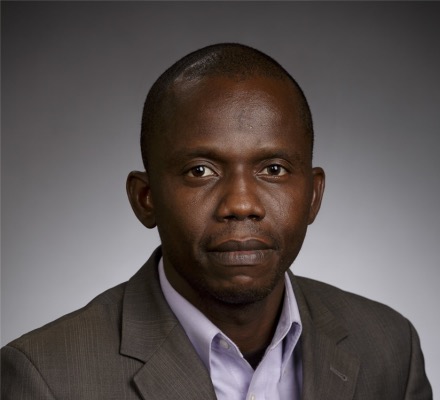
Dr. Kazeem Olanrewaju is an Associate Professor in the Department of Chemical Engineering at Prairie View A&M University (PVAMU), where he has served in teaching and research roles since 2014. He earned his Ph.D. in Chemical and Biochemical Engineering from the University of Iowa in 2012. His more than 15 years of experience in the chemical engineering profession across both the public and private sectors includes positions as Chemical/Cement Laboratory Engineer at the State Highway Administration, Maryland Department of Transportation, Associate Consultant at ChemProcess Technology (CPT) LLC., and Process Safety and Risk Analyst Co-op at Akzo Nobel Functional Chemical in Stenungsund, Sweden. He also holds master’s degrees in Chemical and Biochemical Engineering from the University of Iowa and Environmentally Sustainable Process Technology from Chalmers University of Technology, Sweden, and a bachelor’s degree in Chemical Engineering from Obafemi Awolowo University, Nigeria.
Dr. Olanrewaju’s research integrates chemical engineering principles, computational modeling, and machine learning to address challenges in human physiology and sustainable energy. His interests include multiscale modeling of species transport and transformation in biological systems, fluid–structure interactions, biorenewable and supercritical-fluid reactions, and applications of machine learning to physiological and energy systems data. His scholarly work spans biomedical transport, neurodegenerative disease assessment, cellulose conversion, and carbon dioxide capture. He serves as principal investigator on an NIH-funded project examining glucose transglycosylation and optimization in the proximal small intestine, and as co-principal investigator on projects supporting mixed reality in engineering education and the Gulf Scholars Program. His teaching encompasses thermodynamics, transport phenomena, bioreaction in human physiology, process modeling, and biomedical engineering, with an emphasis on student mentorship and computational tools. His honors include the 2021 AIChE Minority Affairs Committee’s 30th Anniversary James Wei Award and Distinguished Service Awards.