Abstract
Orthorexia nervosa (ON) is a pattern of disordered eating marked by an obsessive preoccupation with healthy eating, which can lead to rigid dietary restriction and significant impairment. Difficulties in executive functioning, the higher-order cognitive processes that guide goal-directed behavior, have been implicated in eating disorders, and ON in particular has been linked to deficits in cognitive flexibility, a core component of executive function. However, evidence for this relationship has been inconsistent, and the role of distress tolerance has not been previously examined. This presentation will highlight a series of three cross-sectional studies investigating how cognitive flexibility and distress tolerance relate to ON symptoms. The presentation will describe findings from both self-report measures (the Cognitive Flexibility Inventory) and performance-based measures of executive function (the Wisconsin Card Sorting Test), showing that specific dimensions of flexibility, rather than flexibility as a whole, are differentially associated with ON symptoms. Particular emphasis will be placed on distress tolerance, which emerged as a potential risk and maintenance factor: individuals with lower distress tolerance reported higher levels of ON symptoms. Implications for theory, research, and clinical practice will be discussed, along with directions for future research, including combining self-report and performance-based assessments of executive function and examining these relationships in clinical populations with ON.
Speaker Bio
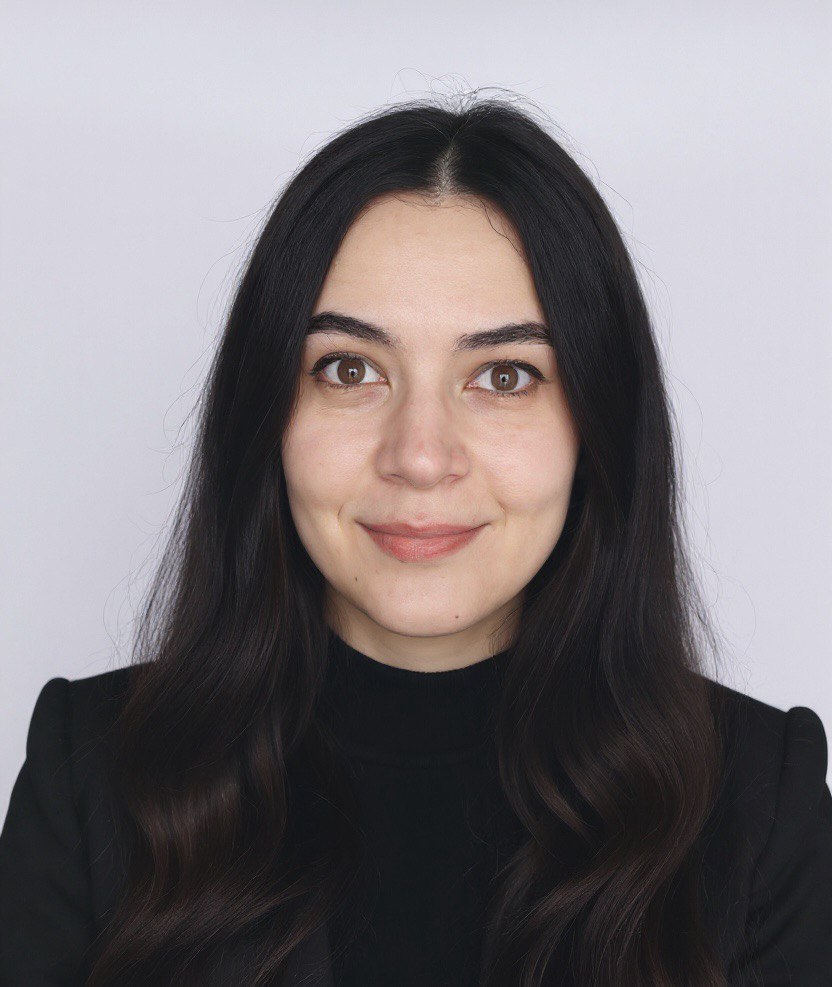
Dr. Niki Hayatbini is a postdoctoral fellow in the T32 AI/ML and Precision Nutrition program (AIPrN) at Prairie View A&M University. Her interdisciplinary research bridges cognitive psychology, machine learning, and nutrition science, integrating behavioral science with AI/ML methods to understand how cognitive, behavioral, and nutritional factors shape physical and mental health. She is also interested in the human-centered evaluation of AI systems in health contexts.
Dr. Hayatbini earned her Ph.D. in Cognitive Psychology, where her work focused on executive functions, particularly cognitive flexibility and its role in mental health and disordered eating. She also holds a Master’s degree in Clinical Psychology. Prior to joining Prairie View A&M University, she was a postdoctoral researcher in the School of Nursing and Health Studies at the University of Washington, where she studied K–12 behavioral and mental health.