Abstract
The development of brain-penetrant kinase inhibitors remains a major challenge in central nervous system (CNS) oncology and neurodegeneration due to restrictive blood–brain barrier (BBB) transport and efflux mechanisms. We established an AI-enabled, computer-aided drug design (CADD) platform that integrates structure-based modeling, molecular dynamics, kinase selectivity profiling, and pharmacokinetic (PK) optimization to rationally engineer selective, BBB-competent kinase inhibitors with translational potential. Our approach combines orthosteric and allosteric strategies to maximize target engagement while minimizing off-target toxicity and ABC transporter–mediated efflux.
In oncology, we identified highly potent VEGFR2 inhibitors (HA46, HA47; IC₅₀ = 1.3 and 0.72 nM) that significantly suppressed angiogenesis in HUVEC assays and reduced tumor growth in xenograft models without detectable systemic toxicity. Concurrently, selective HER2 inhibitors and dual HER2/VEGFR2-targeted analogs demonstrated robust in vivo efficacy in HER2-positive breast cancer models, with enhanced antitumor activity in combination regimens. BBB permeability was optimized through precise modulation of lipophilicity (LogP/LogD), conformational flexibility, and efflux liability, validated by PAMPA-BBB assays and predictive in silico modeling.
Beyond oncology, repurposed kinase scaffolds exhibited potent antibacterial activity against multidrug-resistant pathogens (MRSA, VRE), underscoring platform versatility. Furthermore, selective modulation of the tau–Fyn signaling axis attenuated Aβ-induced inflammatory responses, supporting therapeutic potential in Alzheimer’s disease.
Collectively, this integrated discovery framework delivers first-in-class, brain-penetrant kinase inhibitors with strong preclinical efficacy, favorable safety profiles, and clear translational trajectories for CNS malignancies, brain metastases, and neurodegenerative disorders.
Speaker Bio
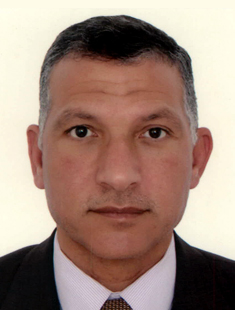
Dr. Hamed I. Ali got his Ph.D. degree in Japan in 2007. He completed his postdoctoral training at TAMU-Rangel College of Pharmacy, then was promoted to Instructor, Lecturer, Assistant Professor, and then Associate Professor. Dr. Ali has several years of expertise in designing, synthesizing, and biologically screening selective tyrosine kinase inhibitors for targeting aggressive metastatic breast cancer. Through his successful scholarly activity, he garnered substantial extramural/intramural funding. He has mentored more than 30 undergraduate, graduate, and Pharm-D students. Accordingly, he received the “Faculty Research Award” in 2023 for demonstrating sustained and impactful scholarship at RCOP. Dr. Ali also demonstrated excellence in teaching Medicinal Chemistry/Pharmacology for Pharm-D and graduate students, being recognized as “Teacher of the Year” in 2017 and 2021 and “Teaching Team of the Year” for 10 consecutive years at RSOP. He received the “Texas A&M University-Distinguished Achievement Award” in 2019.